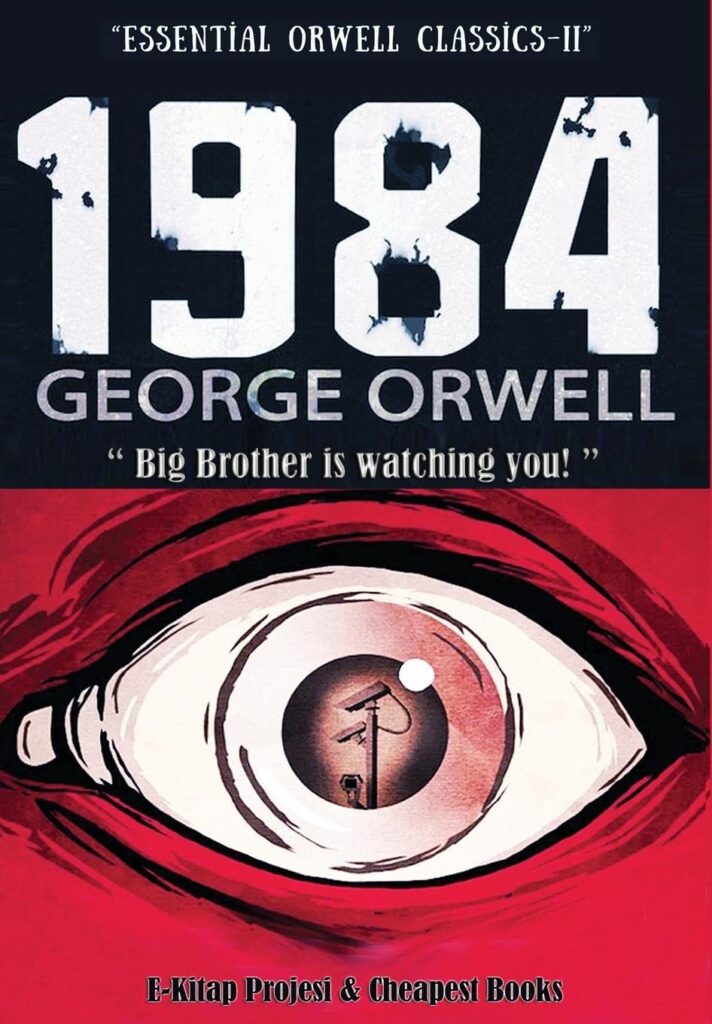

1984 by George Orwell
About the Author
George Orwell (born Eric Arthur Blair) was an English novelist, essayist, and journalist renowned for his sharp political insight and moral clarity. His writing exposed the dangers of totalitarianism, propaganda, and the abuse of power, often drawing from his own experiences with imperialism, poverty, and political repression. Orwell’s lucid prose and fearless criticism made him one of the most influential voices of the 20th century. Terms like “Big Brother,” “thoughtcrime,” and “doublethink” have entered everyday language, reflecting his enduring impact on political and cultural discourse.
Story in Brief
1984 is set in a dystopian future where the totalitarian state of Oceania exercises absolute control over its citizens. The government, led by the omnipresent Big Brother, monitors every action, rewrites history, and suppresses independent thought. Winston Smith, a low-ranking Party member, secretly rebels by questioning the regime and seeking truth, love, and freedom. His resistance, however, brings him face to face with the brutal mechanisms of power that crush individuality and enforce obedience.
Challenges / Bans
1984 is one of the most frequently challenged and banned novels of the modern era, largely due to its political themes and disturbing content.
Cold War Era (U.S. & UK): Criticized for being either pro-communist or anti-communist, depending on the political climate, leading to removals from libraries and reading lists.
Soviet Union & Eastern Bloc: Banned for its clear condemnation of authoritarianism, censorship, and state surveillance.
Modern School Challenges: Frequently challenged for themes of sexual content, violence, pessimism, and its portrayal of oppressive government control.
Why It’s Still Important
1984 remains a chilling warning about the fragility of truth and freedom. In an age of mass surveillance, misinformation, and political manipulation, Orwell’s vision feels disturbingly relevant. Banning this novel risks silencing a vital conversation about power, resistance, and the responsibility of individuals to question authority. More than a dystopian story, 1984 is a timeless defense of intellectual freedom and human dignity.