
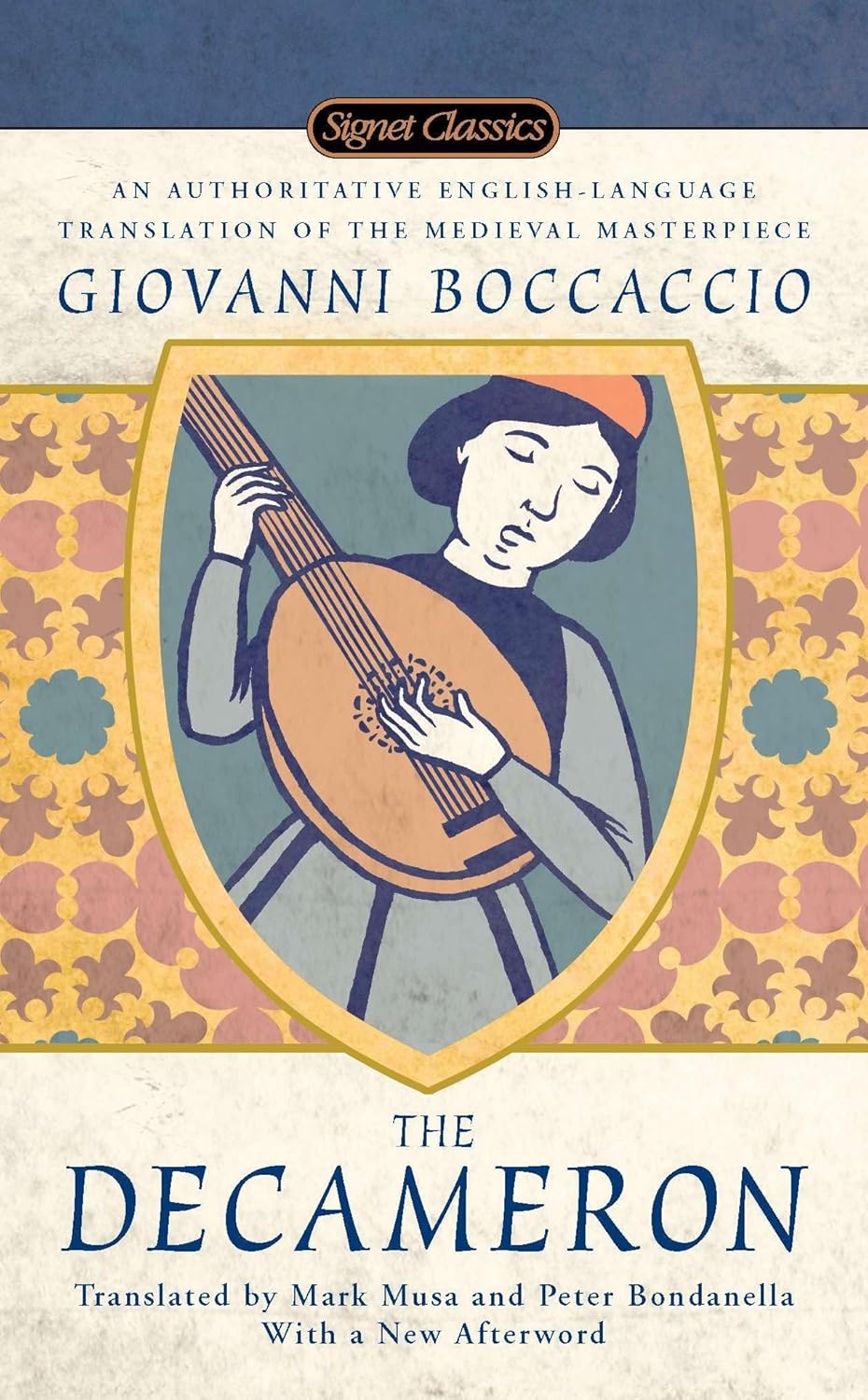
Banned Book Spotlight: The Decameron by Giovanni Boccaccio
Why the Book Still Matters Today
Written in the 14th century, The Decameron feels shockingly modern. Its stories confront human desire, hypocrisy, corruption, and survival during crisis—issues that still shape our world. Set against the backdrop of the Black Death, the book shows how people turn to storytelling to cope with fear, loss, and uncertainty.
In an age of pandemics, moral panic, and censorship, The Decameron reminds us that humor, honesty, and narrative freedom are essential tools for understanding human nature.
Content and Themes
The Decameron is a collection of 100 short stories told by ten young people sheltering from the plague. Beneath its playful surface lie powerful themes:
- Human desire vs. social morality – Love, lust, and pleasure are explored without shame.
- Religious hypocrisy – Corrupt clergy and false piety are openly mocked.
- Intelligence over authority – Wit often triumphs over power, wealth, or status.
- Female agency – Women are portrayed as clever, expressive, and morally complex.
- Life in the face of death – Storytelling becomes an act of resistance against despair.
Its realism and irreverence challenged medieval norms—and still unsettles rigid moral frameworks today.
About the Author: Giovanni Boccaccio
Giovanni Boccaccio (1313–1375) was one of the founders of Italian prose literature and a key figure of early Humanism. A contemporary and admirer of Dante, Boccaccio shifted literature away from purely religious subjects toward real human experience—desire, humor, suffering, and joy.
With The Decameron, he broke literary conventions by writing in the vernacular and centering everyday people instead of saints or kings.
Why The Decameron Was Banned
The book faced censorship for centuries due to:
- Explicit sexual content
- Satire of the Church and clergy
- Challenge to traditional moral values
- Frank portrayal of women’s sexuality and independence
The Catholic Church placed The Decameron on the Index of Prohibited Books, and many later editions were heavily censored or altered. Authorities feared its honesty would undermine religious authority and social discipline.
✦ Final Thought
The Decameron was banned not because it was immoral—but because it was too truthful. It exposes the gap between public virtue and private desire, reminding us that literature’s job is not comfort alone, but confrontation.
Reading it today isn’t just an encounter with a classic—it’s an act of reclaiming literary freedom.