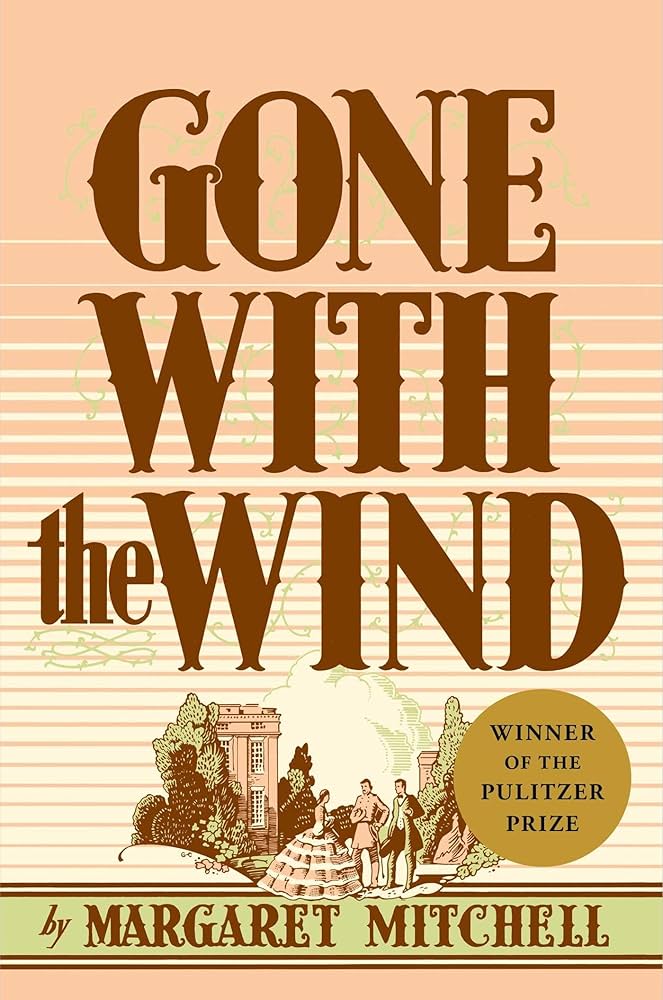

Gone with the Wind by Margaret Mitchell
About the Author
Margaret Mitchell was an American novelist and journalist, best known for her sweeping historical epic Gone with the Wind. Her work vividly portrays the American South during the Civil War and Reconstruction, combining romance, social observation, and historical detail. Mitchell’s singular novel earned her the Pulitzer Prize and remains a landmark in American literature.
Story in Brief
Gone with the Wind follows Scarlett O’Hara, a strong-willed Southern belle, as she navigates love, loss, and survival amid the upheaval of the Civil War and its aftermath. The novel explores themes of resilience, social change, romance, and the clash between old Southern ideals and the harsh realities of war and Reconstruction. Scarlett’s determination and complexity make her one of literature’s most memorable protagonists.
Challenges / Bans
Gone with the Wind has faced criticism and censorship over the years for its portrayal of race, slavery, and the antebellum South:
Modern Criticism: Challenged in schools for perceived racial stereotyping and romanticization of the Confederacy.
Public Debate: Some editions and adaptations have included disclaimers or contextual introductions to address historical inaccuracies and racial depictions.
Why It’s Still Important
Despite controversies, Gone with the Wind offers insight into historical memory, human resilience, and the social upheaval of the Civil War era. Its enduring characters and sweeping narrative continue to captivate readers, while debates about its content encourage critical engagement with history, representation, and cultural storytelling.