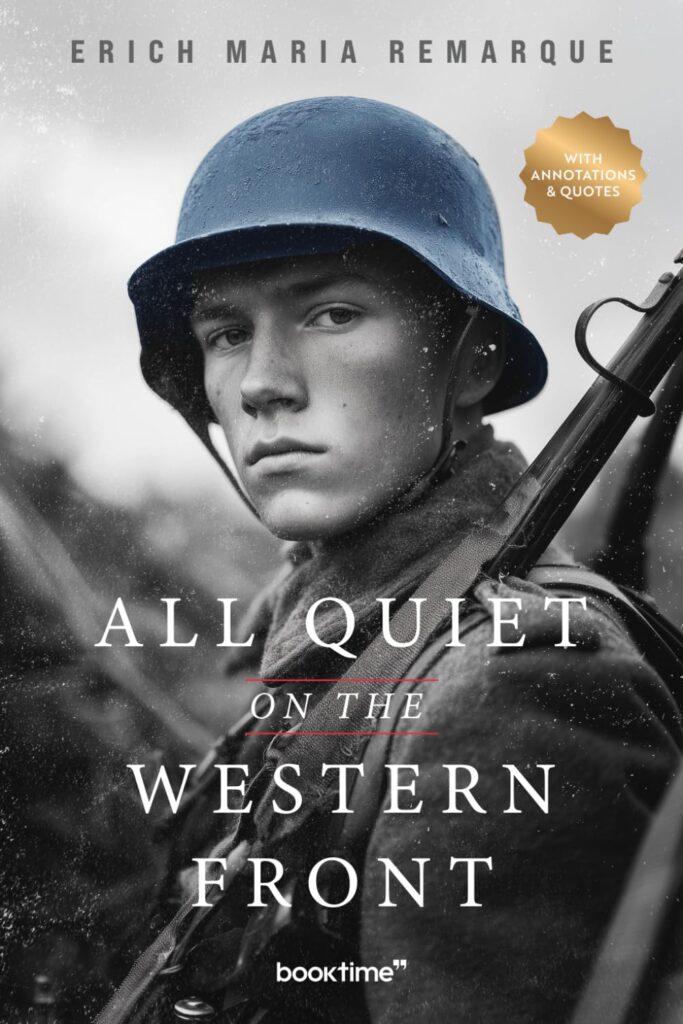

All Quiet on the Western Front by Erich Maria Remarque
About the Author
Erich Maria Remarque was a German novelist and World War I veteran whose writing drew directly from his experiences as a soldier. Deeply affected by the brutality and psychological trauma of war, Remarque rejected nationalism and romanticized heroism. All Quiet on the Western Front (1929) became his most famous work, offering one of the most uncompromising anti-war statements in modern literature.
Story in Brief
The novel follows Paul Bäumer, a young German soldier who enlists in World War I after being influenced by patriotic propaganda. On the Western Front, Paul and his classmates confront relentless violence, hunger, fear, and loss. As friends die and ideals collapse, Paul becomes emotionally numb, alienated from civilian life and disillusioned with authority. The story strips war of glory, revealing it as a machinery of suffering that destroys youth, innocence, and humanity.
Challenges / Bans
All Quiet on the Western Front has faced widespread censorship across decades:
Nazi Germany: Banned and publicly burned for its anti-war stance and criticism of militarism.
United States: Frequently challenged in schools for graphic violence, strong language, and disturbing realism.
Political Controversy: Accused of being unpatriotic and demoralizing to soldiers and national pride.
Why It’s Still Important
The novel remains one of the most powerful condemnations of war ever written. Its honest portrayal of trauma, loss, and psychological devastation continues to resonate in a world still shaped by conflict. Banning this book risks silencing a vital reminder of war’s true cost—not in victories or flags, but in broken lives and lost generations.