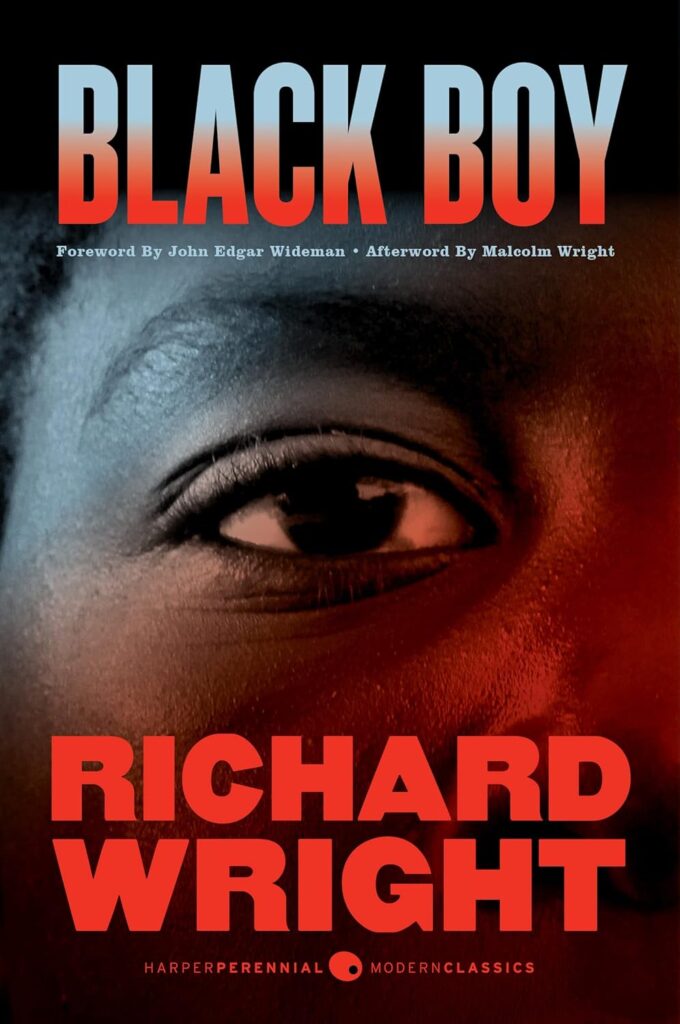

Black Boy by Richard Wright
About the Author
Richard Wright was an American novelist, essayist, and social critic whose writing confronted racism, poverty, and violence in 20th-century America. Born in the segregated South, Wright drew heavily from his own life experiences to expose the psychological and social damage inflicted by systemic oppression. Black Boy (1945), his autobiographical masterpiece, stands as one of the most powerful narratives of Black consciousness and resistance in American literature.
Story in Brief
Black Boy recounts Wright’s childhood and early adulthood in the Jim Crow South and later in Chicago. Growing up amid extreme poverty, racial violence, and emotional neglect, Wright develops a fierce hunger for knowledge and self-expression. As he encounters censorship, brutality, and betrayal, books become his refuge and rebellion. The memoir explores themes of identity, intellectual freedom, racism, survival, and the cost of speaking truth in a society built on silence.
Challenges / Bans
The book has faced persistent censorship since its publication:
United States: Frequently banned or challenged in schools for profanity, sexual content, and depictions of violence.
Racial Controversy: Criticized for its unflinching portrayal of racism and white supremacy.
Political Objections: Targeted for its criticism of American institutions and exploration of radical ideas.
Why It’s Still Important
Black Boy remains a vital testimony to the psychological toll of racism and the liberating power of literacy and self-awareness. Its honesty forces readers to confront uncomfortable truths about race, freedom, and intellectual oppression. Banning this memoir risks erasing an essential voice that challenges historical amnesia and demands moral reckoning.