
Classic Banned Books on Social Criticism and Racial Injustice
Literature has always reflected society. Some writers chose comfort and silence, while others chose truth. Many classic books openly criticized racism, slavery, segregation, colonialism, and social inequality. Because of this honesty, these books were banned, challenged, or removed from schools and libraries. The bans were not only about language or scenes. They were about fear. Fear of ideas that questioned power and exposed injustice.
One of the earliest and most influential banned books is Uncle Toms Cabin by Harriet Beecher Stowe. Stowe was raised in a religious family and strongly believed slavery was morally wrong. Her novel showed the cruelty of slavery and the suffering of Black families. Southern states banned the book because it threatened the system of slavery and encouraged empathy for enslaved people. The book played a major role in changing public opinion and contributed to the growing anti slavery movement.
Narrative of the Life of Frederick Douglass by Frederick Douglass is another powerful banned work. Douglass was born enslaved and escaped through education and courage. His autobiography exposed the violence and inhumanity of slavery. Slaveholding states banned the book because it showed that enslaved people were intelligent and capable. The book challenged the lie that slavery was necessary or humane.
The Adventures of Huckleberry Finn by Mark Twain criticized slavery through satire and moral conflict. Twain grew up near the Mississippi River and witnessed slavery firsthand. The novel shows a white boy helping an enslaved man escape, which challenges racist values. The book was banned for its racial language, even though its message condemns racism and hypocrisy in American society.
To Kill a Mockingbird by Harper Lee reflects the racism Lee saw growing up in Alabama. Inspired by her lawyer father, the novel tells the story of a Black man falsely accused in a racially biased court. Schools banned the book for language and for confronting racism directly. Despite this, it remains one of the most important novels about justice and empathy.
Native Son and Black Boy by Richard Wright exposed systemic racism and its psychological damage. Wright grew up in poverty in the American South and experienced racism daily. Native Son shows how fear and oppression shape a young Black mans fate, while Black Boy tells Wrights own story. Both books were banned for violence and honesty, but their true crime was revealing how deeply racism damages lives.
Invisible Man by Ralph Ellison explores how Black individuals are ignored and erased by society. Ellison used fiction to show how racism operates invisibly. The book was challenged for political themes and criticism of American ideals. It remains one of the most important novels on identity and power.
Their Eyes Were Watching God by Zora Neale Hurston centers a Black womans voice and experience. Hurston was an anthropologist who valued Black culture and language. The novel was banned and criticized for its themes and language, but it is now recognized as a cornerstone of African American literature.
The Color Purple by Alice Walker focuses on Black women facing racism and abuse while searching for dignity and freedom. Walker grew up under segregation and became a strong activist. The book was banned for explicit themes, but it gave voice to women who were often silenced.
Beloved and The Bluest Eye by Toni Morrison confront the lasting trauma of slavery and racism. Morrison believed history must be remembered honestly. Beloved shows how the past haunts the present, while The Bluest Eye reveals how racist beauty standards destroy self worth. Both books were banned for disturbing themes but are now considered literary masterpieces.
I Know Why the Caged Bird Sings by Maya Angelou is a memoir about growing up Black in a racist society. Angelou later became a civil rights activist and poet. The book was banned for its honesty about trauma and racism, yet it continues to inspire readers around the world.
Go Tell It on the Mountain and The Fire Next Time by James Baldwin challenge American racism and hypocrisy. Baldwin grew up in Harlem and wrote fearlessly about race and identity. His books were banned for controversial ideas but helped shape the civil rights conversation.
The Souls of Black Folk by W E B Du Bois introduced the concept of double consciousness and analyzed the Black experience in America. Du Bois was a scholar and activist whose work was banned for challenging white supremacy and exposing inequality.
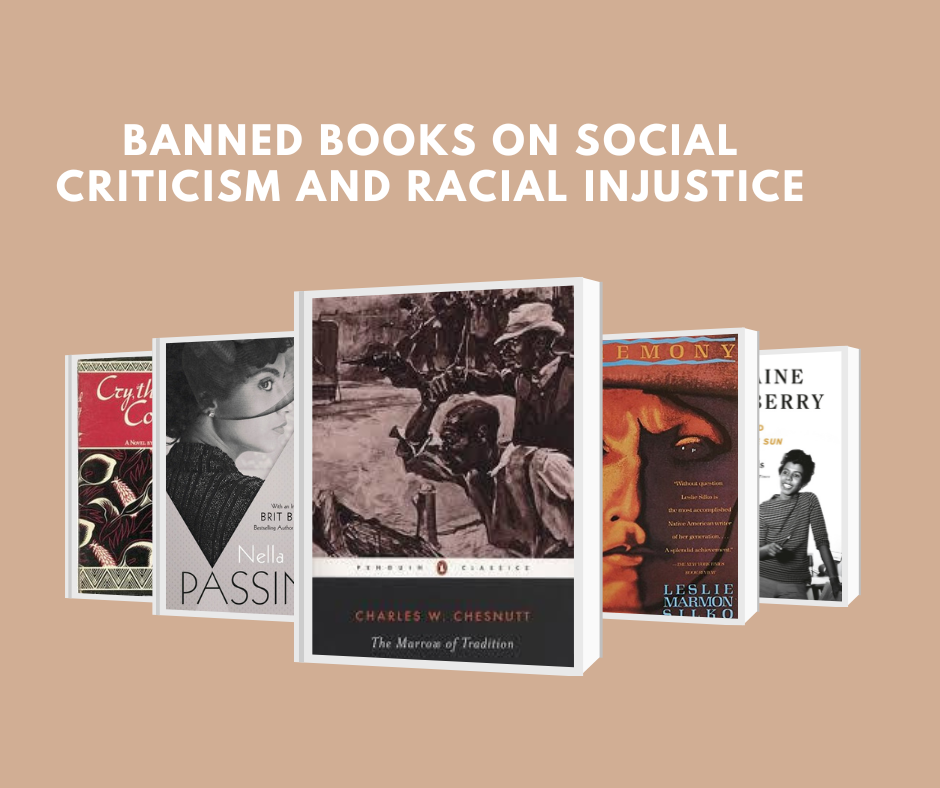
A Raisin in the Sun by Lorraine Hansberry shows a Black family fighting housing discrimination. Hansberry experienced this injustice personally. The play was banned for challenging racial barriers and presenting Black life with dignity and realism.
Cry the Beloved Country by Alan Paton criticized racial segregation in South Africa. Paton opposed apartheid, and his novel exposed the pain caused by racial laws. The book faced bans because it challenged the system of racial control.
Things Fall Apart by Chinua Achebe corrected colonial portrayals of Africa. Achebe showed African society before European domination and criticized imperial racism. The book was challenged for questioning Western narratives.
The Autobiography of Malcolm X by Malcolm X reveals a life shaped by racism and resistance. Malcolm X became a powerful voice against racial oppression. The book was banned for its radical critique of American society.
Roll of Thunder Hear My Cry by Mildred D Taylor shows racism through the eyes of a Black child in the South. The book was banned for racial themes, even though it teaches resilience and justice.
Black Like Me by John Howard Griffin documents a white journalist experiencing racism firsthand. The book shocked readers and was banned for exposing everyday discrimination.
The Jungle by Upton Sinclair exposed exploitation of immigrants and workers. Though often remembered for food safety, it also criticized social inequality and was banned for disturbing content.
Bury My Heart at Wounded Knee by Dee Brown revealed the violent history of Native American oppression. The book was banned for challenging national myths and exposing genocide.
Ceremony by Leslie Marmon Silko explores Native American identity and the damage of colonialism. It was challenged for cultural themes and criticism of racism.
Passing by Nella Larsen examines racial identity and the pressure to hide ones true self. The book was controversial for confronting race and class.
Song of Solomon by Toni Morrison, Roots by Alex Haley, The Marrow of Tradition by Charles Chesnutt, and The Warmth of Other Suns by Isabel Wilkerson all reveal different layers of racial injustice, history, and survival. Each faced bans or challenges for exposing uncomfortable truths about society.
Conclusion
These books were banned because they spoke honestly about injustice. They questioned systems built on racism and silence. Attempts to suppress them failed. Instead, they became more powerful. Today, these books remain essential for understanding history, empathy, and social change.