
Political Dissent and Anti Authoritarian Themes in Literature
Literature has often been the voice of resistance. When governments demand silence, writers respond with stories. Political dissent in books means questioning power, exposing lies, and defending freedom of thought. Anti authoritarian literature shows how absolute control damages truth, identity, and humanity. Because these ideas threaten authority, many such books were banned or censored. Read Banned Classics That Challenge, Confront, and Endure in this article.
1. Nineteen Eighty Four by George Orwell
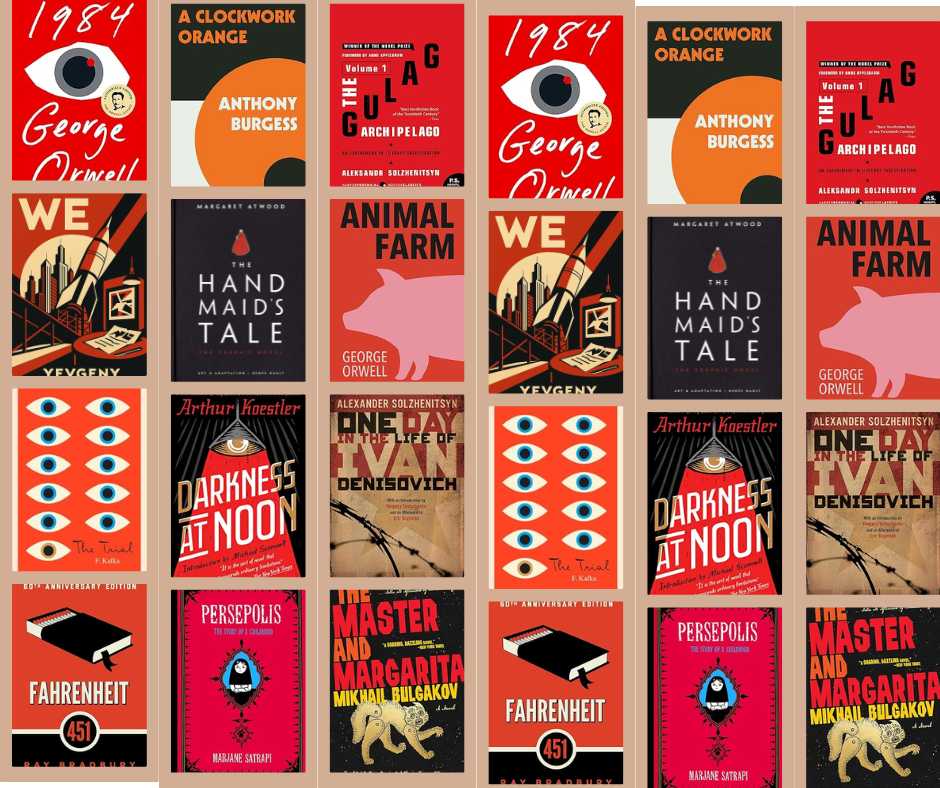
One of the strongest examples is Nineteen Eighty Four by George Orwell. Orwell wrote about a world where the government controls truth, memory, and language. People are watched constantly and punished for thinking freely. The novel criticizes totalitarian power and propaganda. It was banned in several countries because it exposed how fear is used to rule societies.
2. Animal Farm by George Orwell
Animal Farm by George Orwell uses animals to tell a political story. After a revolution, the new leaders become just as cruel as the old ones. The book criticizes authoritarian leadership and false promises of equality. It was banned in communist countries because it reflected real political abuse and corruption.
3. Fahrenheit Four Hundred Fifty One by Ray Bradbury
Fahrenheit Four Hundred Fifty One by Ray Bradbury presents a society where books are destroyed and questioning is forbidden. The government fears knowledge and independent thinking. Bradbury warned against censorship and passive obedience. The book was banned in some schools because it challenged authority and defended intellectual freedom.
4. Brave New World by Aldous Huxley
Brave New World by Aldous Huxley shows a world controlled through pleasure and conditioning. People are kept obedient by comfort rather than fear. The novel criticizes systems that remove freedom in exchange for stability. It was banned for questioning social control and political order.
5. The Trial by Franz Kafka
The Trial by Franz Kafka portrays a man trapped in a powerful and confusing system. He is accused without knowing why and cannot defend himself. Kafka shows how individuals lose power under faceless authority. The book was banned in authoritarian states because it revealed the cruelty of unchecked bureaucracy.
6. We by Yevgeny Zamyatin
We by Yevgeny Zamyatin describes a future society where people have numbers instead of names. The state controls every part of life. Individual freedom does not exist. The book was banned in the Soviet Union because it criticized collectivism and strict state control. It later influenced many dystopian novels.
7. The Handmaids Tale by Margaret Atwood
The Handmaids Tale by Margaret Atwood shows a society where the state controls belief, language, and bodies. Power is justified through ideology. The novel criticizes authoritarian rule and loss of personal freedom. It has been banned for its political message and its challenge to oppressive systems.
8. Darkness at Noon by Arthur Koestler
Darkness at Noon by Arthur Koestler focuses on political purges and forced confessions. The story reveals how authoritarian governments destroy truth and loyalty. The book was banned because it exposed the inner workings of totalitarian regimes.
Additional Books on Political Dissent and Anti Authoritarian Themes
1. A Clockwork Orange by Anthony Burgess
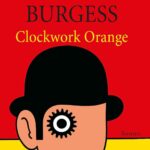
A Clockwork Orange by Anthony Burgess explores state control over free will. The government uses psychological conditioning to force obedience. The novel questions whether control without choice is true order. It was banned for its themes and criticism of authority.
2. The Gulag Archipelago by Aleksandr Solzhenitsyn
The Gulag Archipelago by Aleksandr Solzhenitsyn exposes the brutal prison system of the Soviet Union. Solzhenitsyn was imprisoned himself and wrote from experience. The book revealed political repression and abuse of power. It was banned because it directly challenged state lies.
3. One Day in the Life of Ivan Denisovich by Aleksandr Solzhenitsyn
One Day in the Life of Ivan Denisovich by Aleksandr Solzhenitsyn shows a single day in a labor camp. The novel exposes the harsh reality of authoritarian punishment. It was banned after initial publication because it revealed truth about state oppression.
4. Persepolis by Marjane Satrapi
Persepolis by Marjane Satrapi is a graphic memoir about growing up under an authoritarian regime in Iran. It shows censorship, fear, and resistance through a personal lens. The book was banned in several places for political criticism.
5. The Master and Margarita by Mikhail Bulgakov
The Master and Margarita by Mikhail Bulgakov uses satire and fantasy to criticize authoritarian power and censorship. Bulgakov wrote under strict control and faced suppression. The novel exposes hypocrisy and fear within oppressive systems. It was banned during the authors lifetime.
Conclusion
Books about political dissent are dangerous to those who seek control. They teach readers to question authority and defend freedom. Anti authoritarian literature warns us how easily power can silence truth. These books were banned not because they were harmful, but because they were honest.
Even today, these stories remain relevant. They remind us that freedom begins with thought, and thought begins with reading. Banned books survive because ideas cannot be imprisoned.