Why Leaves of Grass Was Banned
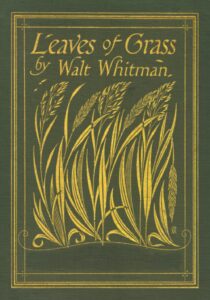
When Walt Whitman first published Leaves of Grass in 1855, it was like nothing American readers had seen before. The poetry was bold, free-flowing, and deeply personal. But what really shocked people was its openness about the human body, sexuality, and desire. For a society that valued modesty and moral restraint, Whitman’s frank celebration of physical love was scandalous.
In some places, the book was labeled obscene and immoral. Libraries refused to carry it, and Boston’s district attorney even threatened Whitman’s publisher with prosecution unless certain “offensive” passages were removed. Rather than cut his work, Whitman stood by it, losing his publisher but gaining a reputation as a fearless literary rebel. His openness about topics others avoided made Leaves of Grass one of the most frequently challenged works of its time.
About the Author: Walt Whitman
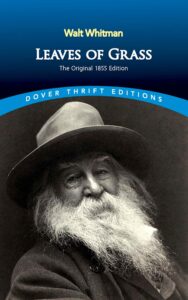
Walt Whitman was born in 1819 in West Hills, New York, and grew up in a working-class family. He worked as a printer, teacher, journalist, and government clerk before dedicating himself to poetry. Whitman was a lover of democracy, nature, and human connection. He believed in the dignity of every person and saw beauty in both the physical and the spiritual sides of life.
Whitman published Leaves of Grass at his own expense and kept revising and expanding it throughout his life. He wasn’t afraid to break the rules—his poetry had no strict meter or rhyme, and his subjects were often considered too intimate or too daring for the time. Today, he is remembered as one of America’s greatest poets, often called the “father of free verse.”
Content and Themes of Leaves of Grass
Leaves of Grass is not a single poem, but a collection that grew and evolved through several editions during Whitman’s lifetime. It celebrates life in all its forms—human, natural, and spiritual. The poems praise the body and the senses, explore the self, and find the divine in everyday experiences.
Whitman writes about love, friendship, sexuality, work, and the natural world with a directness that was radical for the 19th century. His famous “Song of Myself” speaks to the interconnectedness of all people and the shared experience of being alive. Other sections, like “Calamus” and “Children of Adam,” openly address same-sex love and physical passion—topics rarely acknowledged in print at the time.
Why the Book Still Matters Today
More than a century later, Leaves of Grass still feels alive and fresh. Whitman’s vision of a world without boundaries—where every person is worthy of celebration—remains powerful. His openness about sexuality, diversity, and the human spirit continues to inspire writers, artists, and readers.
The controversy it stirred is part of its legacy. By refusing to censor himself, Whitman expanded the possibilities of what literature could say and be. Leaves of Grass is not just a collection of poems—it’s a declaration of freedom, individuality, and unity. Even today, it invites us to see ourselves and each other with the same unfiltered wonder Whitman saw in the world around him.