
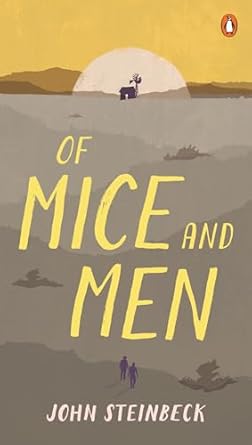
Of Mice and Men by John Steinbeck
Of Mice and Men by John Steinbeck has long been considered a classic of American literature, yet it has also been one of the most frequently challenged and banned books in schools and libraries.
The novel has faced censorship for its use of profanity, depiction of violence, portrayal of racial slurs, and references to sex. Some schools and parents have objected to the book’s language and its unflinching presentation of marginalized people and harsh realities.
The character of Crooks, an African American stable hand, is subject to racial discrimination, which has led to the book being pulled from classrooms despite its strong anti-racist message. Other challenges stem from the portrayal of Lennie, a mentally disabled man, and the controversial ending, which involves a mercy killing.
Though some consider the themes too mature or upsetting for young readers, many educators and literary scholars argue that these difficult topics are precisely what make the novel essential reading.
Of Mice and Men centers on two displaced ranch workers, George and Lennie, during the Great Depression. George is small and sharp, while Lennie is physically strong but has a cognitive disability.
The two men travel together, dreaming of one day owning a piece of land. Their relationship is tender but strained by Lennie’s inability to control his strength, which ultimately leads to tragedy. Through their story, Steinbeck explores themes of loneliness, friendship, the American Dream, and the brutal reality faced by the powerless.
The novel raises important questions about society’s treatment of those who are different and the human need for connection. Even decades after its publication, Of Mice and Men continues to resonate for its emotional honesty and the timeless relevance of its themes. It remains a powerful reminder of the dignity of those often overlooked and the fragility of hope in a harsh world.



About the Author
John Steinbeck, the author of Of Mice and Men, was born in 1902 in Salinas, California. He spent much of his early life in California’s farming regions, which greatly influenced his writing.
Steinbeck’s work often focused on working-class characters, the Great Depression, and the struggles of ordinary people trying to survive hardship with dignity.
He received the Pulitzer Prize for The Grapes of Wrath in 1940 and was awarded the Nobel Prize in Literature in 1962. Steinbeck’s empathy for the downtrodden and his unflinching look at social injustices earned him both admiration and controversy during his lifetime.