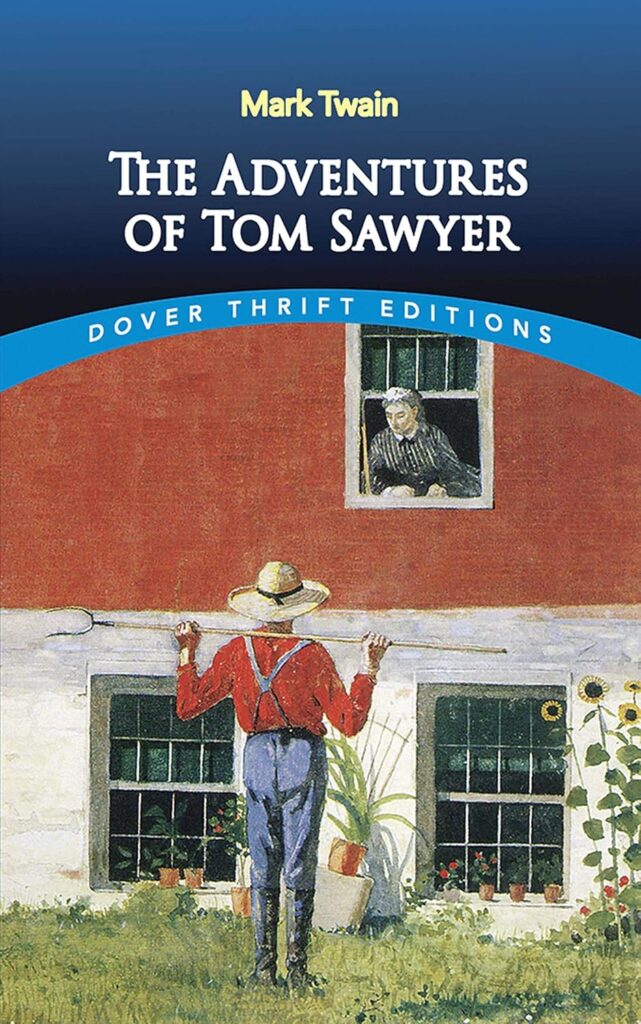

The Adventures of Tom Sawyer by Mark Twain
About the Author
Mark Twain, born Samuel Langhorne Clemens, was an American novelist, humorist, and social critic whose writing captured the spirit and contradictions of 19th-century America. Known for his sharp wit and moral insight, Twain used humor to expose hypocrisy, racism, and social injustice. The Adventures of Tom Sawyer (1876) remains one of his most enduring works, celebrating childhood imagination while quietly critiquing societal norms.
Story in Brief
Set in the fictional town of St. Petersburg, Missouri, The Adventures of Tom Sawyer follows the mischievous and imaginative Tom Sawyer as he navigates childhood adventures along the Mississippi River. From whitewashing fences and skipping school to witnessing a murder and uncovering hidden treasure, Tom’s escapades blend humor with danger. Beneath its playful surface, the novel explores themes of freedom, morality, social conformity, and the loss of innocence.
Challenges / Bans
Despite its status as a children’s classic, the novel has faced repeated censorship:
United States: Frequently challenged or banned in schools for racial slurs and language reflecting 19th-century attitudes.
Cultural Sensitivity: Criticized for perpetuating racial stereotypes and outdated social views.
Educational Debates: Removed from reading lists due to concerns about its suitability for young readers without proper historical context.
Why It’s Still Important
The Adventures of Tom Sawyer remains a vital snapshot of American childhood and social values in the post-Civil War era. While its language reflects its time, the novel invites critical discussion about history, race, and moral growth. Banning it risks erasing an opportunity to confront uncomfortable truths and understand how literature reflects—and challenges—the society that produces it.