
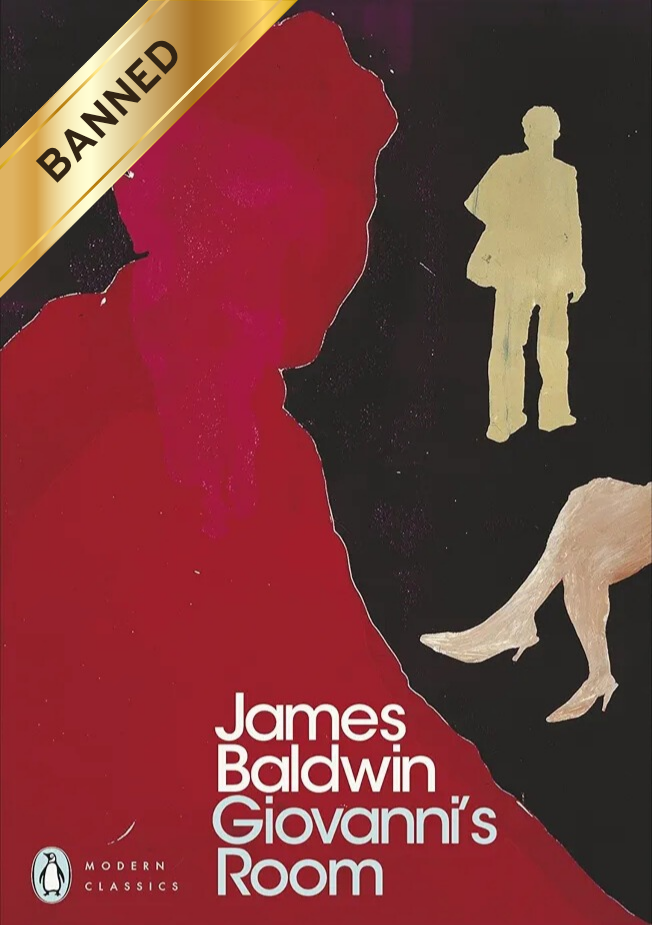
Giovanni’s Room by James Baldwin
Why the Book Still Matters Today
Published in 1956, Giovanni’s Room remains one of the most courageous novels of the 20th century. At a time when homosexuality was criminalized, condemned, and silenced, Baldwin wrote a tender yet devastating story about love between two men.
Today, the novel still speaks powerfully about identity, shame, masculinity, and the fear of living authentically. In societies where people continue to struggle between social expectations and private truth, Baldwin’s message feels urgent: denying who you are comes at a tragic cost.
Content and Themes
Set in 1950s Paris, the novel follows David, an American expatriate who falls in love with Giovanni while trying to suppress his own sexuality. The emotional intensity of the story lies not in scandal—but in psychological conflict.
Key themes include:
Sexual identity and repression – The damage caused by internalized shame.
Masculinity and fear – How rigid gender roles distort emotional honesty.
Isolation and exile – Physical and emotional displacement.
Love vs. societal expectation – The unbearable tension between desire and conformity.
Self-deception – The danger of choosing safety over truth.
Baldwin’s prose is intimate, lyrical, and emotionally raw—turning a love story into a profound tragedy.
About the Author: James Baldwin
James Baldwin (1924–1987) was one of America’s most important literary voices—an essayist, novelist, and civil rights thinker. Though widely known for addressing race in America, Baldwin took a bold risk with Giovanni’s Room: he centered white characters and focused explicitly on same-sex love.
Publishers warned him the book would ruin his career. Instead, it cemented his legacy as a fearless writer who refused to be confined by expectation—racial, social, or literary.
Why Giovanni’s Room Was Banned
The novel has faced censorship and removal from schools and libraries because of:
Explicit depiction of same-sex relationships
Themes of homosexuality and sexual identity
Moral objections from conservative groups
Discomfort with its challenge to traditional masculinity
In many educational settings, it has been labeled “inappropriate” or “immoral.” But what unsettles censors most is not explicitness—it is Baldwin’s refusal to portray queer love as shameful or disposable.
Final Thought
Giovanni’s Room was controversial because it dared to say: love is real, even when society denies it.
Baldwin does not sensationalize; he humanizes. And in doing so, he exposes the quiet violence of repression.
Reading this novel today is not just revisiting a banned book, it is confronting the timeless question:
What happens when we betray our own truth?